Lobo Tiggre Says Silver’s Violent Pullback Looks Like a Flush, Not a Top, as Miners Lag Record Prices in Early 2026
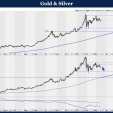
NEW YORK (January 20) As markets settle into the first weeks of 2026 following a year of sharp gains and rising volatility across precious metals, silver surged sharply before reversing in a violent pullback. Gold also pushed to new highs before retreating. The speed of the move reignited widespread speculation around forced liquidations, institutional stress, and market manipulation, but Lobo Tiggre, editor of The Independent Speculator, said the price action itself does not signal the end of the bull cycle.
“I don’t think this is a blow-off top,” Tiggre said, describing the episode as a leverage flush in a market that had moved vertically.
“Mr. Slammy Failed Spectacularly”
Addressing claims of a coordinated effort to suppress silver prices, Tiggre said the recent selloff does not resemble a successful takedown. “If that was Mr. Slammy,” Tiggre said, “he failed spectacularly.”
Tiggre said exchanges have long-established rules for extreme volatility and margin adjustments, and similar mechanisms exist across major markets. While the timing raised suspicions among traders, he cautioned against drawing firm conclusions based solely on price action. “If it was, if it wasn’t, there’s nothing we can do about it,” he said
He added that focusing too heavily on manipulation narratives can distract investors from the bigger picture. “There’s always manipulation,” Tiggre said, noting that he does not let that prevent him from participating in markets where he believes the underlying trend remains intact.
Volatility Is Normal in Vertical Markets
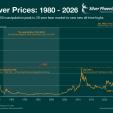
Tiggre said sharp pullbacks are common when prices rise rapidly, commenting that “whenever anything goes vertical, there’s often wiggles along the way,” arguing that volatility alone does not define a market top. He also urged investors to rethink how silver is evaluated in the current cycle. Rather than anchoring to prior peaks, Tiggre said the more relevant reference point is the cycle’s base. “You need to start from the base,” he said, pointing to late 2015.
From that perspective, Tiggre said silver’s recent performance fits a familiar pattern. “Every diehard silver bull you ever talk to will tell you that silver lags gold at first and then more than catches up in the end,” he said. That phase, he added, can still allow for higher prices, but it also brings greater volatility and risk.
Consolidation Is Preferable to a Blow-Off Top
Rather than hoping for a euphoric spike, Tiggre said a period of consolidation would be healthier for the market as 2026 unfolds. A blow off top, he said, may deliver quick gains but often marks the end of a cycle. A corrective or sideways phase allows fundamentals to catch up and can extend the broader bull market. “If we go into a period of correction and consolidation,” Tiggre said, “I would actually consider that a much better outcome than a blow-off top.”

Why Miners Continue to Lag the Metal
Despite record prices for silver and gold, mining equities have yet to rerate meaningfully, with Tiggre noting the market appears to be questioning whether current prices are sustainable. “The big money doesn’t think this is sustainable and that there will be a pullback,” he said.
That skepticism, he explained, discourages buying during vertical moves, even among investors who remain constructive on the sector longer term. Tiggre argued that the underlying economics of mining remain compelling even if prices retreat. “If silver drops 30% from here,” Tiggre said, “that is a fantastic price for the actual business of mining.”
He noted that many operations were designed using far lower assumptions, suggesting that “the crappier ones are designed around $20 silver, and the better ones $15 silver,” Tiggre said. At current levels, he added, miners “are making money hand over fist.”
A Simple Screen for Silver Stocks
Tiggre offered a blunt test for investors evaluating mining equities. “If you’re a silver investor in the stocks and your silver company isn’t making money now,” he said, “there’s something wrong with that company.”
He emphasized that this discipline applies primarily to equities, not physical metal, adding that he views gold and silver bullion as long-term insurance, while mining stocks require active risk management and valuation discipline.
Profit Taking Is Part of the Cycle
With retail enthusiasm rising and extreme price targets circulating online, Tiggre said crowd psychology is behaving as it does in every bull market. “That happens whenever there’s a bull market,” he said.
He rejected the idea that selling equates to abandoning conviction, noting that “there is nothing wrong with taking profits,” concluding that, “no gain is real until you take some profits and realize it.”
The 2011 Hangover Still Shapes Investor Behavior
Tiggre said mining equities continue to carry scar tissue from the last major precious metals cycle, when higher prices failed to translate into shareholder value. That history, he said, has left investors demanding proof rather than promises.
He said this cycle is showing improved discipline, with fewer reckless acquisitions and clearer margin expansion. Earnings reports expected early in 2026, Tiggre said, should begin to reinforce that shift.
Execution Matters More Than Buybacks
Asked what would restore investor confidence, Tiggre pointed to operational performance rather than financial engineering, saying cost control, margin expansion, and execution on the ground matter most. He was cautious about buybacks as a primary signal, noting that “share buybacks, in a way, are a red flag,” arguing that markets prefer to see reinvestment in durable value creation during a bull market.
Spot Prices Are Not a Long-Term Business Plan
Tiggre warned against valuing mining companies using current spot prices, particularly for long-life assets. “Costs always catch up in the end,” he said. He defended conservative assumptions in mine planning and feasibility studies, noting that many projects operate for decades. “You can’t use anything remotely like the current spot price” when committing billions of dollars to build a mine, he said.
The 2026 Outlook
Tiggre believes fiscal dominance remains the defining macro force shaping markets. Persistent government spending and monetary accommodation, he argued, continue to support real assets even as economic signals remain mixed.
That framework underpins his positioning across commodities, and while Tiggre remains constructive on gold and silver, he said volatility and consolidation could limit their performance over shorter time frames this year. His preferred risk-reward setup for 2026 lies in industrial metals, particularly copper.
Tiggre also highlighted uranium as supply-constrained, but warned that it carries unique event risk. “If there is a nuclear accident,” he said, uranium “can be an investment class that literally melts down on you.”

He cautioned that enthusiasm around artificial intelligence has become embedded in copper and uranium equities, creating downside risk if that narrative deflates. Even so, Tiggre said longer-term supply constraints and the fiscal backdrop remain supportive.
On geopolitics, Tiggre said China’s policy shifts and export controls add volatility, potentially increasing the strategic value of North American production over time. Jurisdictional risk, he added, remains critical, citing West Africa as a no-go and Mexico as improving but still unproven.
Patience and discipline matter more than chasing momentum, according to Tiggre. “You can make volatility your friend,” he said, adding that mining equities may take multiple quarters, not days, to reflect improved fundamentals.
Watch the full interview with Lobo Tiggre on Kitco News for his complete breakdown of silver’s volatility, the failure of manipulation narratives, why miners remain discounted, and how fiscal dominance is shaping his outlook for 2026.
KitcoNews