Silver Squeeze 2.0 Drives Price Over $80


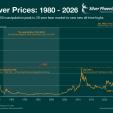
Silver surged above $80 an ounce on Friday, capping a meteoric rally that drove the metal’s price up 176 percent over the year.
What is driving silver higher at such an unprecedented rate?
There are several factors.
- Dollar weakness
- Inflation
- Resilient industrial demand
- Growing investor interest as the price rises
- Momentum spillover from the gold bull market
- The U.S. adding silver to the critical mineral list
However, one fundamental reality dominates the silver market...
There isn’t enough silver.
This has evolved into a significant silver squeeze.
The Anatomy of a Silver Squeeze
We saw the first round of the silver squeeze in October. It pushed the price over $50 for the first time.
Problems started earlier in the year when tariff worries incentivized the movement of silver out of London vaults to the U.S. An explosion in Indian silver demand this autumn was the straw that broke the camel’s back.
Initially, Indian buyers were primarily sourcing silver from Hong Kong, but they reportedly shifted more toward London during the Chinese Golden Week Holiday in the first week of October.
But London vaults were already tapped out.
According to Bloomberg, the amount of free float silver available in London dropped from a high of 850 million ounces to just 200 million ounces, a 75 percent decline. Metals Focus estimates that the available metal fell closer to 150 million ounces.
This precipitated a short squeeze.
In simplest terms, a short occurs when somebody sells a silver contract today, committing to deliver silver at a set price in the future with the expectation of a falling market price. If the price drops, the investor can sell the contract and pocket the gain. But if the price rises, the investor suffers a loss. If nobody will buy the contract, he is obligated to deliver the silver.
This short squeeze has caused liquidity in the London market to virtually dry up. This has driven London benchmark prices higher at a very rapid pace, and it has caused a price gap between New York and London. The London spot price recently shot to a $3 premium over New York futures. The last time we saw a premium like this was during the Hunt Brothers’ squeeze.
Meanwhile, the cost to borrow silver overnight rose to well over 100 percent on an annualized basis.
Eventually, metals flowed back into London, easing the squeeze, but it didn’t fix the market.
Not Enough Silver to Meet Demand
The root of the problem is simple: there isn’t enough metal to meet demand.
While shuffling silver between London, New York, and India took the immediate pressure off the market, it didn’t magically create new silver.
Silver demand has outstripped supply for four straight years. The structural market deficit came in at 148.9 million ounces last year. That drove the four-year market shortfall to 678 million ounces, the equivalent of 10 months of mining supply in 2024.
The Silver Institute projects a fifth straight supply deficit this year.
Persistent supply shortfalls have taken their toll on above-ground stocks. According to the Economic Times of India, “Inventories across COMEX, London vaults, and Shanghai have steadily declined over recent years, reinforcing concerns about tightening physical availability.”
London Bullion Market Association vaults have lost around 40 percent of their holdings over the last five years, while COMEX registered inventories in the United States are down nearly 70 percent. Meanwhile, Shanghai inventories have fallen to their lowest level in a decade.
Silver Squeeze 2.0
Today, we’re once again seeing increasing signs of inventory problems in London. The premium between the London physical price and the NY futures price is almost back to $1.
Meanwhile, the spread between the one-year silver swap rate and U.S. interest rates has now plummeted to -7.18 percent.
This means the implied “financing rate” on a 1-year silver swap minus a comparable U.S. interest rate for the same maturity (often 1-year Treasury yield or 1-year SOFR/Libor-type funding) is deeply negative, indicating traders are willing to pay 7 percent more to access physical silver today than they are for delivery one year later. Typically, traders pay more for future delivery, factoring in the costs of storage, insurance, and financing.
Futubull explained the ramifications.
“The situation has now completely reversed, indicating that investors holding paper certificates are seeking physical delivery at any cost. Market observers describe this behavioral pattern as a 'run' on London's 'spot' silver market, which will incentivize investors and users to continue selling paper contracts and instead demand the extraction of physical metal.”
In effect, this implies there is a significant “yield” or “benefit” holding silver relative to holding dollars. This reflects a combination of factors:
- A lack of physical silver and difficulty obtaining it
- Strong demand to be long silver via swaps (or to borrow silver)
- Unusually expensive balance-sheet/shorting conditions
The Paper Problem
The current squeeze highlights another fundamental issue in the silver market that gets very little attention in the mainstream financial media. There is a lot more paper silver than actual metal.
According to analyst Faysal Amin, published by FXStreet, the current paper‑to‑physical ratio stands near 356:1. In other words, for every ounce of physical silver in the world, there are 356 paper ounces.
This is no different than fractional reserve banking. As long as everybody is content to keep their money in the bank, the system hums along quietly. But when people lose faith in the bank and demand their dollars, you end up with bank runs. Similarly, when people demand physical silver, the paper system collapses.
As Amin put it, “Silver prices are not just reacting to demand — they are reacting to the realization that the market’s underlying structure is no longer credible.”
Gold Anti-Trust Action Committee (GATA) director Chris Powell agrees, saying, “Only a short squeeze can plausibly explain the violent price action in silver today.”
“The squeeze is evident in the huge discrepancy between prices in Shanghai, India, London, and New York. Prices in Shanghai and India are far higher, creating an arbitrage opportunity that has been draining metal out of the West, metal that in many cases has multiple owners and isn't readily available.”
China Adding Fuel to the Fire
The announcement of Chinese export restrictions set to go into effect in 2026 added fuel to the silver fire.
Under the policy, only large, licensed, state-approved companies with an annual silver production capacity of 80 tonnes and a credit line exceeding $30 million will be able to export silver. According to analysts, the rules will lock hundreds of small and mid-sized exporters out of the system. These smaller firms are key suppliers to industrial users and silver refiners around the world.
China controls around 60 to 70 percent of the world’s refined silver supply. According to Amin, “This move mirrors China’s earlier strategy with rare earth metals, where export controls were used to secure domestic industrial advantage and global pricing power.”
And as Amin notes, “There is no quick or scalable solution to silver’s structural deficit.”
Given the dynamics of silver mining, producers won’t be able to quickly ramp up production to meet demand, even at much higher prices.
That means users will need to source silver from above-ground stocks. However, people who hold silver are only going to let it go at much higher prices. This is exactly the dynamic we see playing out today.
Silver will undoubtedly correct. (It’s correcting as I write this.) However, investors need to understand that the underlying fundamentals driving silver will almost certainly remain in place. The reality is that the government can and will print more dollars. Nobody can print silver.
*******
More from Silver Phoenix 500